Custom RV and Boat Mattresses: Measuring, Materials and Care
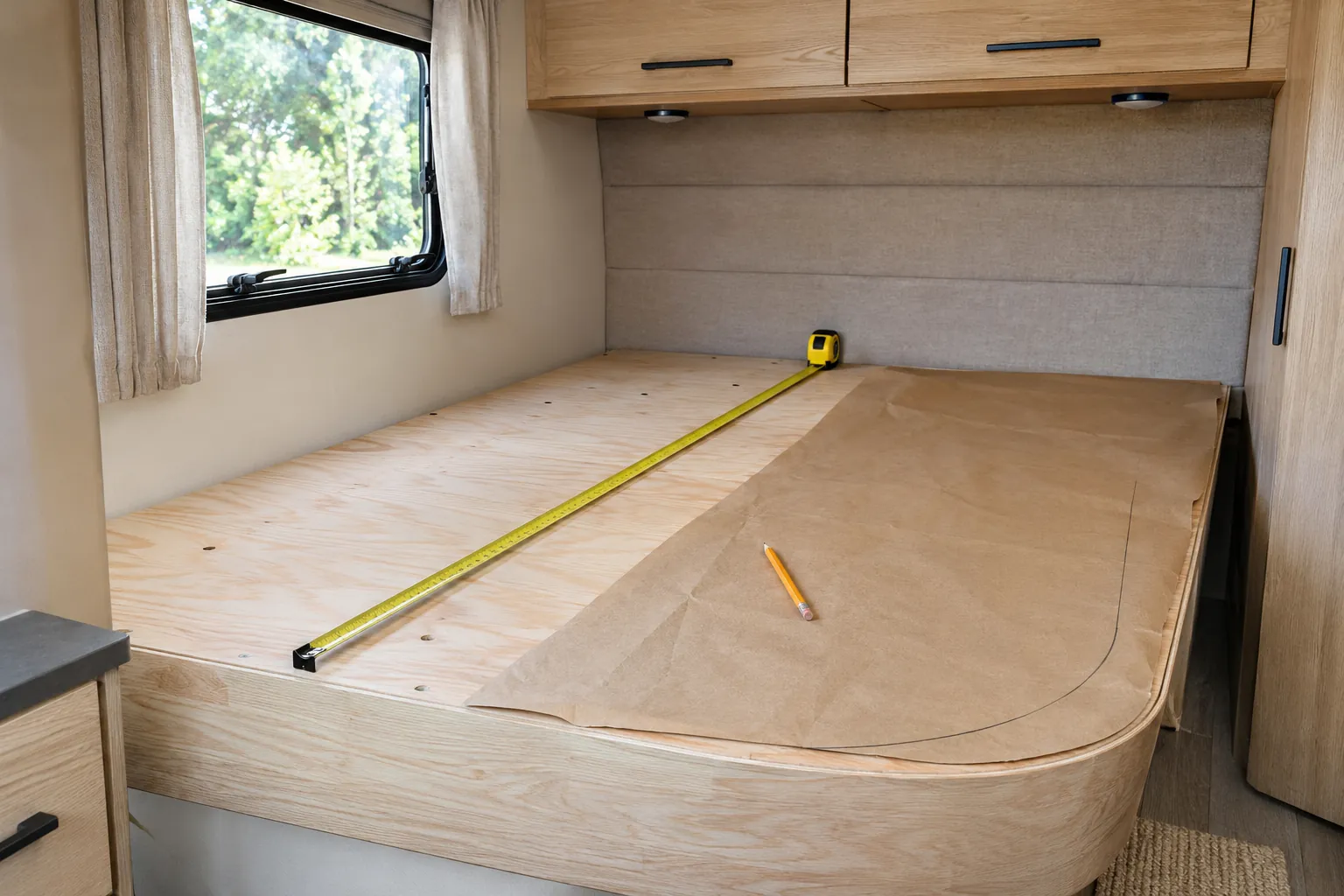
To order a custom mattress for an RV, a travel trailer or a boat, measure the bed base, not the old mattress. Take the width at the head and at the foot, the length on each side, the exact shape of the corners and the free height above the bed. If the base is not rectangular, trace a paper template. Then send us those measurements with a photo: we check them with you before we build anything.
We have been building mattresses in Saint-Léonard since 1980, including for RVs, motorhomes, travel trailers and boats. This guide walks through the method we use with our customers, step by step, then helps you choose the thickness and the materials, and protect the mattress from moisture once it is in place.
Why a standard mattress rarely fits
In a recreational vehicle, the bed is built around the space available, not around the mattress sizes sold in stores. A bed called a “queen” in an RV is often shorter than a home queen, and the dimensions change from one maker and model to the next. Here are the most common RV sizes, according to the size guide from Lippert, an RV components maker:
| RV size | Inches | Centimetres |
|---|---|---|
| Short queen | 60 × 75 | 152 × 191 |
| Queen | 60 × 80 | 152 × 203 |
| Narrow king (RV king) | 72 × 80 | 183 × 203 |
| Bunk beds | From 28 × 75 to 35 × 79 | From 71 × 191 to 89 × 201 |
These sizes are reference points, not order measurements. Two “short queens” from different brands can differ by an inch, and a cut or rounded corner changes everything. That is why we build from the measurements of your base, never from the name of the size.
On a boat, it is even more pronounced. A V-berth follows the shape of the hull: it narrows toward the bow, and its sides are rarely straight. A rectangular mattress then leaves gaps, or it rides up against the hull.
What you need before you measure
- A rigid tape measure, which is more accurate than a sewing tape over a long distance.
- Kraft paper or cardboard large enough to cover the base, if it is not rectangular.
- A pencil, some tape and a phone for photos.
- The bed in its night position: unfold the dinette or sofa bed, and extend the RV’s slide-outs if it has any.
Measuring an RV, motorhome or trailer bed
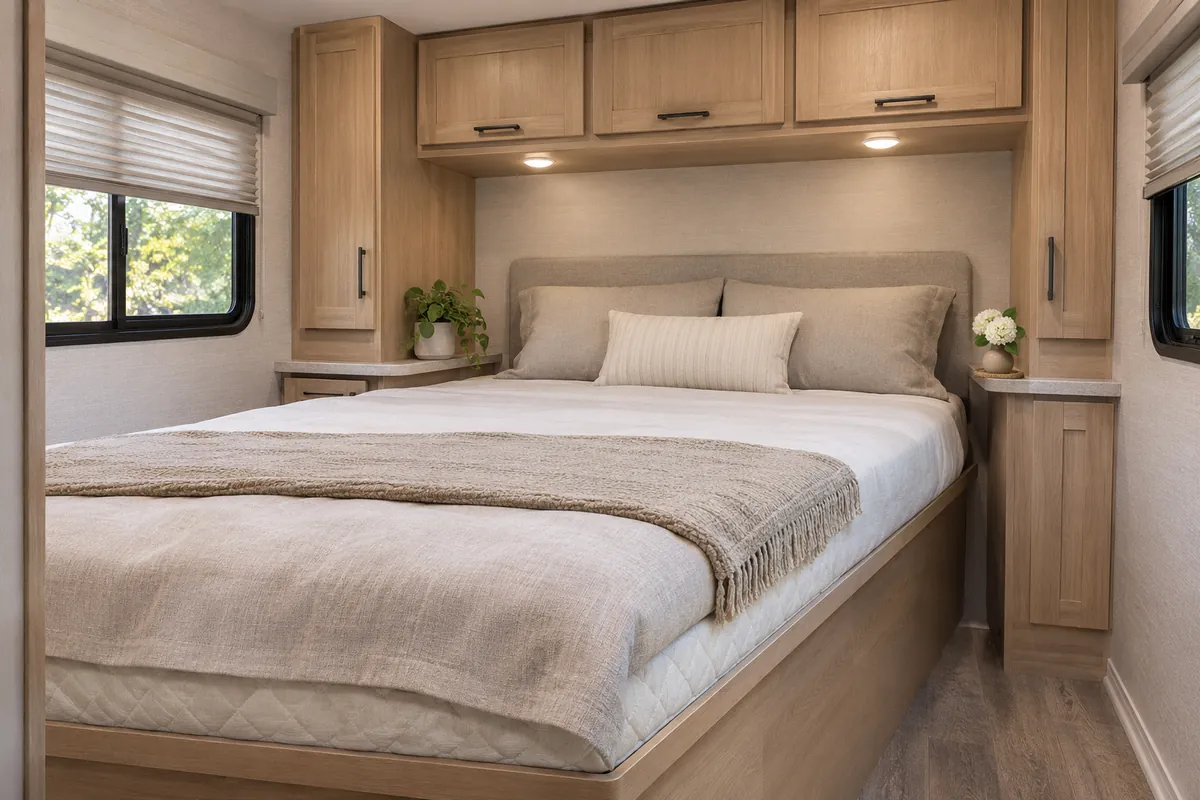
The typical RV bed sits on a plywood base, often with a cut corner to clear the walkway and cabinets above the head. The diagram below shows the measurements to take; the letters match the steps.
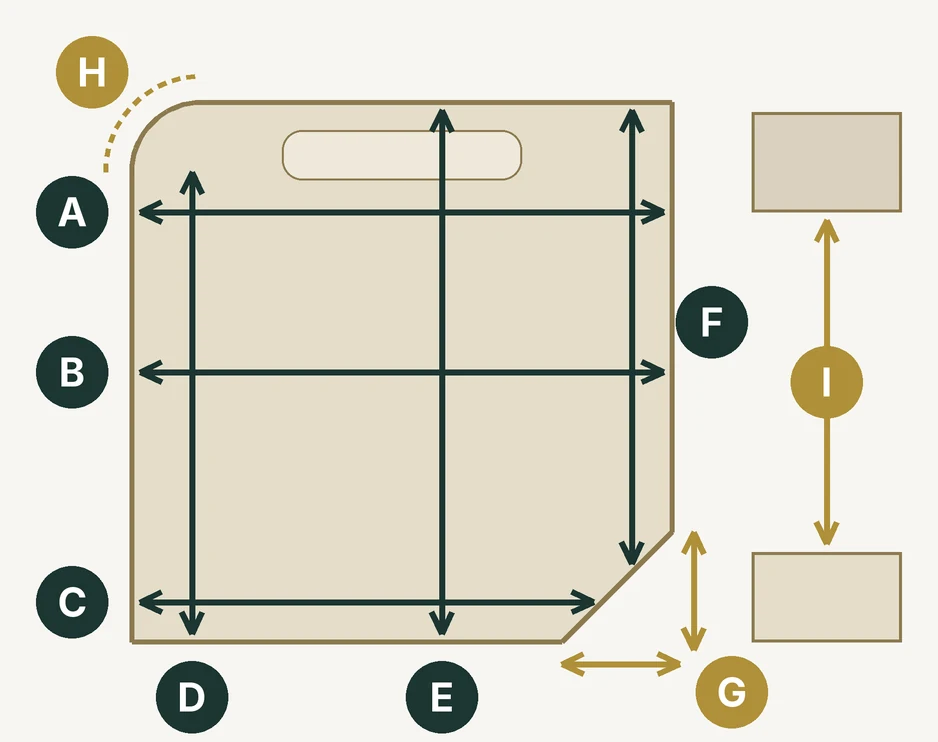
- Remove the current mattress and measure the base itself, from one inside edge to the other. An old mattress has often sagged or lost its shape: its measurements would mislead you.
- Measure the width in three places (A, B, C): at the head, in the middle and at the foot. If the numbers differ, write down all three.
- Measure the length in three places (D, E, F): left side, centre and right side. A difference between the two sides often points to a cut corner or an angled wall.
- Note the shape of the corners (G, H). For a cut corner, measure the length removed along each of the two sides. For a rounded corner, trace it on paper: that is more reliable than an estimated radius.
- Measure the free height (I) between the base and whatever sits above it: cabinets, ceiling, upper bunk. Also check that a lift-up bed still closes and that a slide-out still retracts with the mattress in place.
- Take photos of the base from above, of each unusual corner and of the whole bed, with the tape measure visible if possible.
One last check: the way in. An RV door is narrow. Measure its width and note the turns on the way to the bed, especially for a thick or latex mattress, which does not bend as easily.
Measuring a boat berth
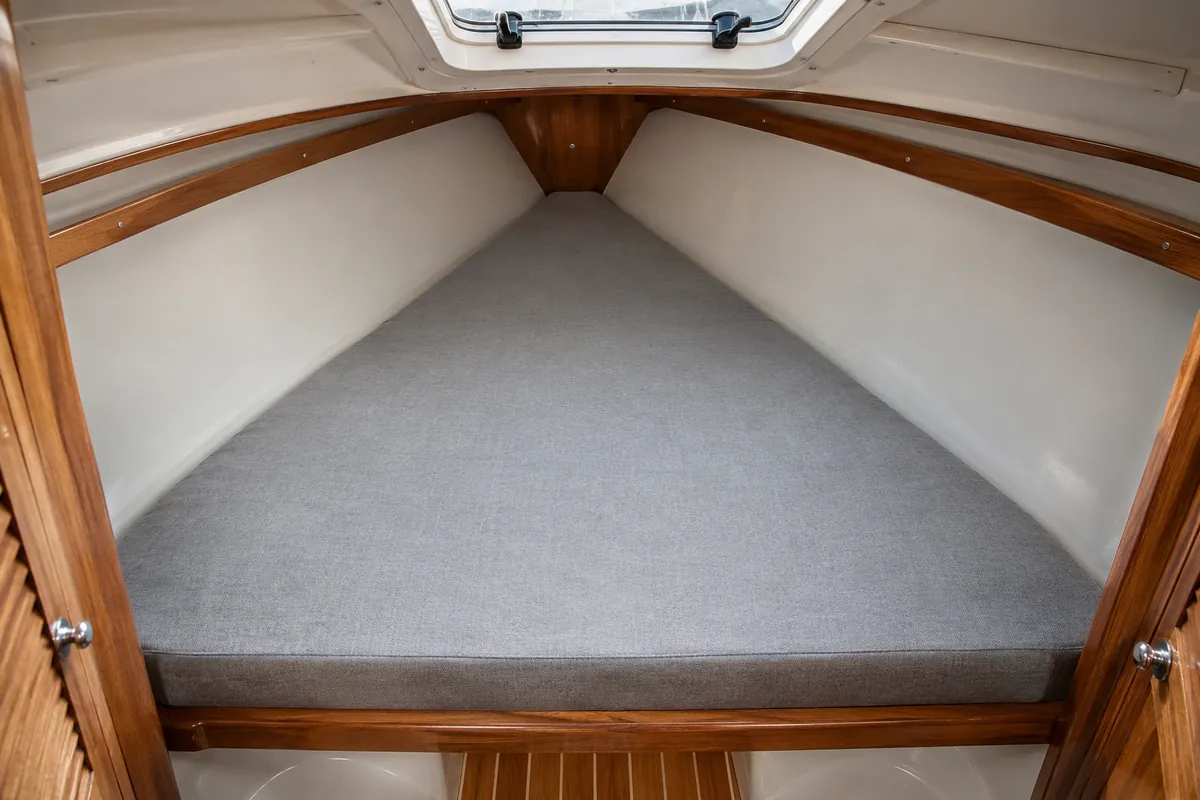
The V-berth at the bow is the hardest to measure, because none of its sides is truly straight. At a minimum, take the following measurements.
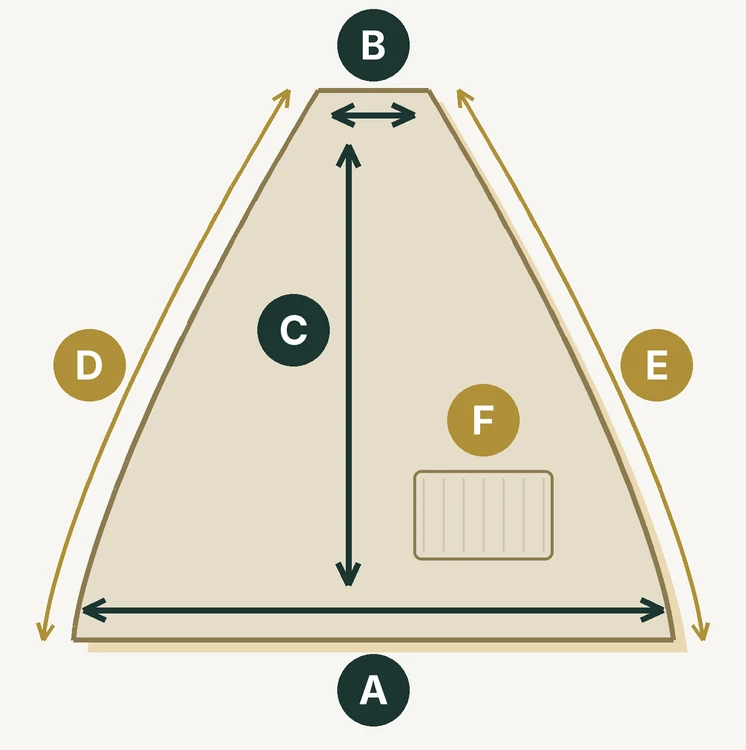
- A: the width at the head, on the wider end;
- B: the width at the foot, on the bow end;
- C: the length along the centre, from head to foot;
- D and E: the length of each side, along the hull;
- F: the position and size of any access hatch under the berth.
Those measurements cannot describe a curve. For a V-berth, a paper template is almost always the best solution. Also measure the thickness of any lip that sticks out and the headroom under the deck at its lowest point: on a sailboat, it drops toward the bow.
The other berths follow the same logic. A quarter berth, tucked under the cockpit, is often narrower at the feet. A convertible dinette is measured with the table lowered, noting the space between the cushions.
The paper template, step by step
- Lay the kraft paper on the base and tape it down so it does not move.
- Trace the inside outline of the base with the pencil, pressing well into the corners.
- Write “head”, “foot” and “top” on the template, then measure it flat to confirm your numbers.
- Photograph the unfolded template next to the tape measure, or bring it straight to our workshop.
Which materials to choose for an RV or a boat
In a house, you choose a mattress mostly for comfort. In a vehicle or a boat, four constraints come on top: weight, since you often lift the mattress to reach the storage underneath; thickness, limited by the free height; moisture, in a small closed space; and temperature swings, since the RV or boat often goes unheated for part of the year.
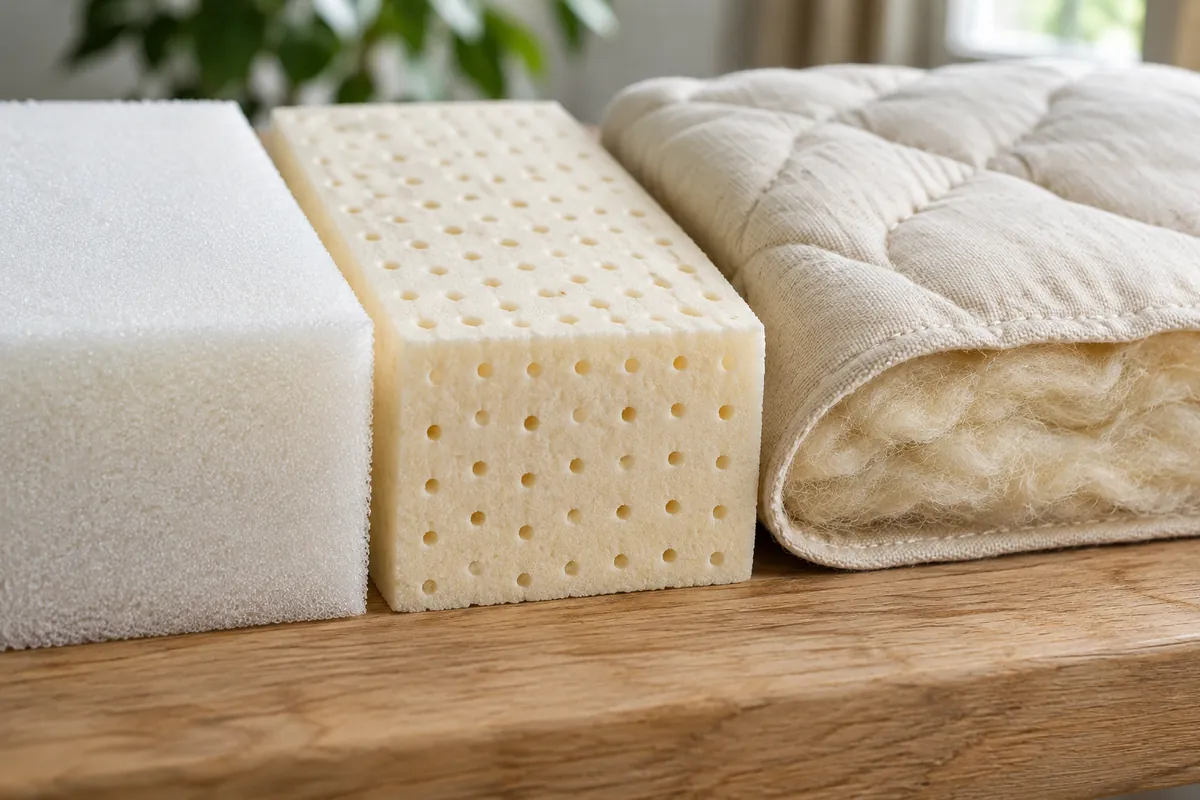
For RVs and boats, we use the same materials as for our home mattresses. Here is how each one behaves in those conditions.
High-density foam: the most common choice
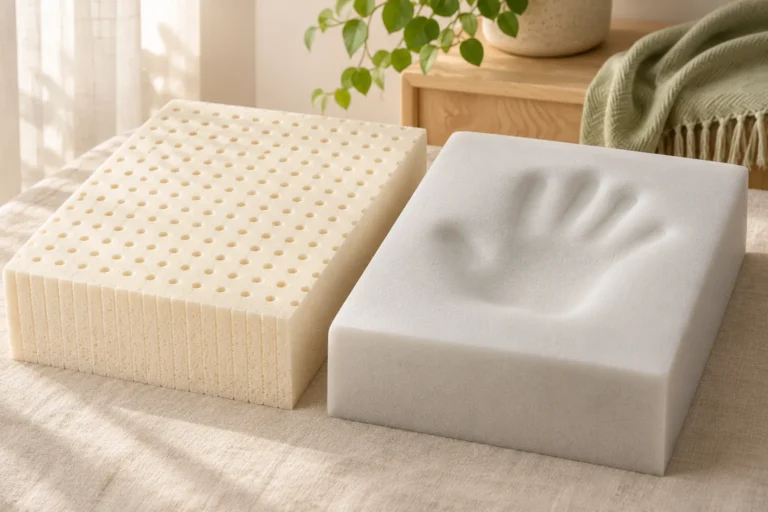
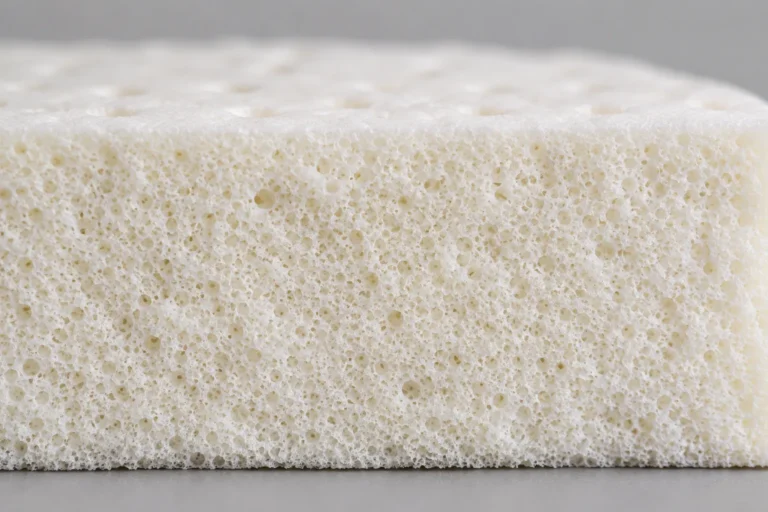
High-density urethane foam is light, can be cut to any shape, including a V-berth, and stays stable on a flat base. It is the material in most of the mattresses we build for RVs. It comes in several firmness levels, and our foams are CertiPUR-US certified.
At the same thickness, it is the density of the foam that determines how well it resists sagging. Our foam mattresses use a high-density or extra-dense base depending on the model. In a thin 4 or 5 inch mattress, that density matters even more, because there is no extra thickness to make up for it. See our foam mattresses to compare the constructions.
Natural Talalay latex: for airflow and extended use
Talalay latex is pierced with small holes through its whole thickness. It lets air circulate more freely than foam, which helps moisture escape in a closed cabin. It springs back quickly and keeps a similar feel from one season to the next, whereas memory foam becomes noticeably firmer in the cold, until body heat softens it.
On the other hand, latex is heavier than foam at the same thickness, and it costs more. It is a good choice for people who live in their RV for much of the year, or for a boat where you sleep often. Our Talalay 8 inch shows an all-latex construction; for an RV, it is usually built thinner.
Latex over foam: a middle ground
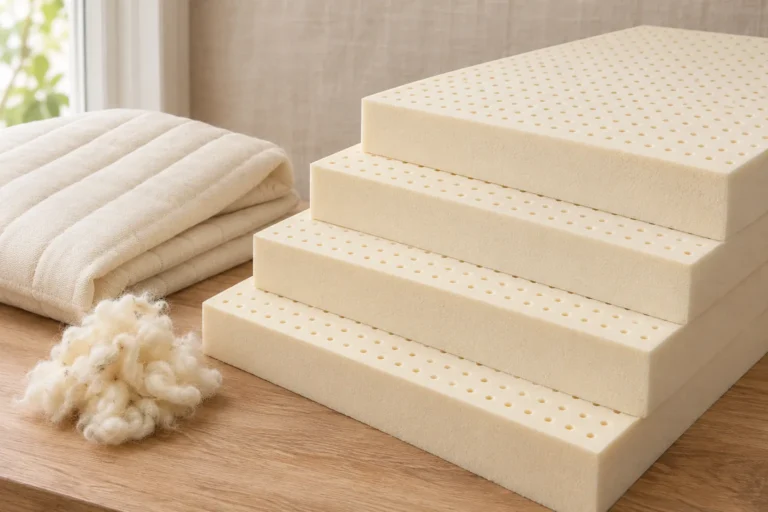
One or two layers of Talalay latex on a high-density foam base give you the feel and breathability of latex at the surface, in a mattress that is lighter and more affordable than an all-latex one. It is the principle behind our Lucern Plus, which we adapt to the thickness available.
Springs: rarely the right choice on board
We also build spring mattresses, but we rarely recommend them for an RV or a boat. Our pocket spring unit alone measures eight inches, before the comfort layer: that is more than the free height of most RV beds. Springs also add weight, and metal does not cope well with the moisture in a cabin. They remain possible in a large motorhome where the height allows it.
The cover
Our mattresses use two types of cover: a quilted fabric filled with fibre and convoluted foam, or organic cotton quilted with natural wool. Wool absorbs some of the moisture in the air and releases it later, which makes it a popular choice in a closed space. Ask us which cover suits your order.
| Material | Strengths on board | Keep in mind |
|---|---|---|
| High-density foam | Light, cuts to any shape, several firmness levels | Choose a high density for a thin mattress |
| Natural Talalay latex | Airflow, steady feel in the cold, springs back | Heavier and more expensive |
| Latex over foam | Latex feel, mid-range weight and price | The latex covers the surface only |
| pocket coils | Classic feel, good airflow | Eight inches of springs, heavy, sensitive to moisture |
To go further on the differences between the materials, see our latex vs memory foamcomparison, as well as our latex mattresses.
Choosing thickness and firmness
In an RV or a boat, thickness is decided first by the free height you measured earlier. A thicker mattress is not necessarily better if it means hitting your head on a cabinet, or if it stops a lift-up bed from closing. Leave enough room to sit up in bed and to make the bed.
Most of the mattresses we build for RVs and boats are between 4 and 6 inches thick. We have also made them as thin as 2 inches when space is very tight, and thicker than 6 inches when the height allows it. There is no one right thickness: it depends on your space and the comfort you are after.
Thickness and firmness go together. In a thin mattress, a foam that is too soft lets you feel the hard base underneath, especially at the hips and shoulders. The thinner the mattress, the more it is worth choosing a medium-firm or firm support, with a comfort layer on top if needed. Our article on firm or soft mattresses helps you pin down your preference.
Moisture, condensation and winter storage
Condensation under the mattress is the most common problem, in an RV as well as on a boat. At night, body heat and moisture pass through the mattress and meet a cold base: solid plywood in an RV, or a berth right against the hull on a boat. The water settles where the air does not move, and mould can appear if the underside never dries.
- Create an air gap under the mattress. A mesh ventilation underlay, sold by marine and RV suppliers, lets air pass between the base and the mattress.
- Lift the mattress regularly. Raise the bed or stand the mattress on its side for a few hours to let the base dry, especially after several nights in a row.
- Ventilate the space. Open a window or hatch slightly, run the roof fan, and use a dehumidifier if the air stays damp.
- Choose a breathable mattress protector. Avoid plastic or vinyl covers, which stop moisture from escaping.
- Do not store things against the mattress. Bags or bedding wedged against the wall block the air and hold the moisture.
Before winter
In Quebec, most RVs and boats spend the winter in storage without heat. Before closing up for the season, remove the bedding, let the mattress dry completely, then store it in a dry place. If it stays on board, stand it on its side so air moves all around it, add a moisture absorber and never wrap it in plastic. In spring, air it out for a few hours before the first trip.
Care and support
- A base that supports the whole surface. The mattress must rest on a firm, solid surface, or on closely spaced slats. It is also a condition of our warranty, which covers custom mattresses.
- Turn it from time to time. If its shape allows, rotate the mattress head to foot to spread the wear. A two-sided version can also be flipped.
- Keep it dry on the road. A breathable, washable mattress protector shields the mattress from spills without trapping moisture.
How to send us your measurements
There is no complicated form. Most of our customers send their measurements by email or by phone, often with a photo of the base or of their old mattress. You can also visit our Saint-Léonard workshop with your template. To speed things up, tell us:
- your measurements, with the letters from the diagram, and the type of vehicle or boat;
- the maximum possible thickness, based on the free height;
- the material and firmness you are interested in, if you have a preference;
- the intended use: a few weekends each summer, or whole months on board.
Then, here is how the order works.
- Measurement check. A team member reviews your measurements with you and asks any missing questions before production.
- Free quote. The consultation and customization are included. The price depends on the size and the materials, and you get a quote before you commit.
- Lead time. Usually one to two weeks, the same as a regular mattress. The exact lead time is confirmed when you order.
- Delivery or pickup. Free delivery on the Island of Montreal, $50 elsewhere in Quebec and $75 in Ontario, or pickup at the workshop. The details are on our delivery page.
Frequently asked questions
Can you make a V-shaped mattress or one with rounded corners?
Yes. We build non-rectangular mattresses to the dimensions or the template you give us: V-berths, cut corners, rounded corners and angled sides.
Can you copy my old mattress?
A photo of the old mattress helps us understand the shape, but we build from the measurements of the base. A worn mattress has often compressed or lost its shape, and copying it would reproduce its flaws.
How much does a custom RV mattress cost?
The price depends on the dimensions, the thickness and the materials. Send us your measurements: the quote is free and you get it before any commitment.
How long does it take?
Usually one to two weeks, the same as a regular mattress. The exact lead time is confirmed when you order, and you can pick the mattress up at the workshop or have it delivered.
Ready to order?
Take your measurements, add a few photos and write to us, or call us at 514 725-1000. To see everything we build in non-standard sizes, visit our custom mattress page and our frequently asked questions.