Latex vs Memory Foam Mattress: Which Should You Choose?
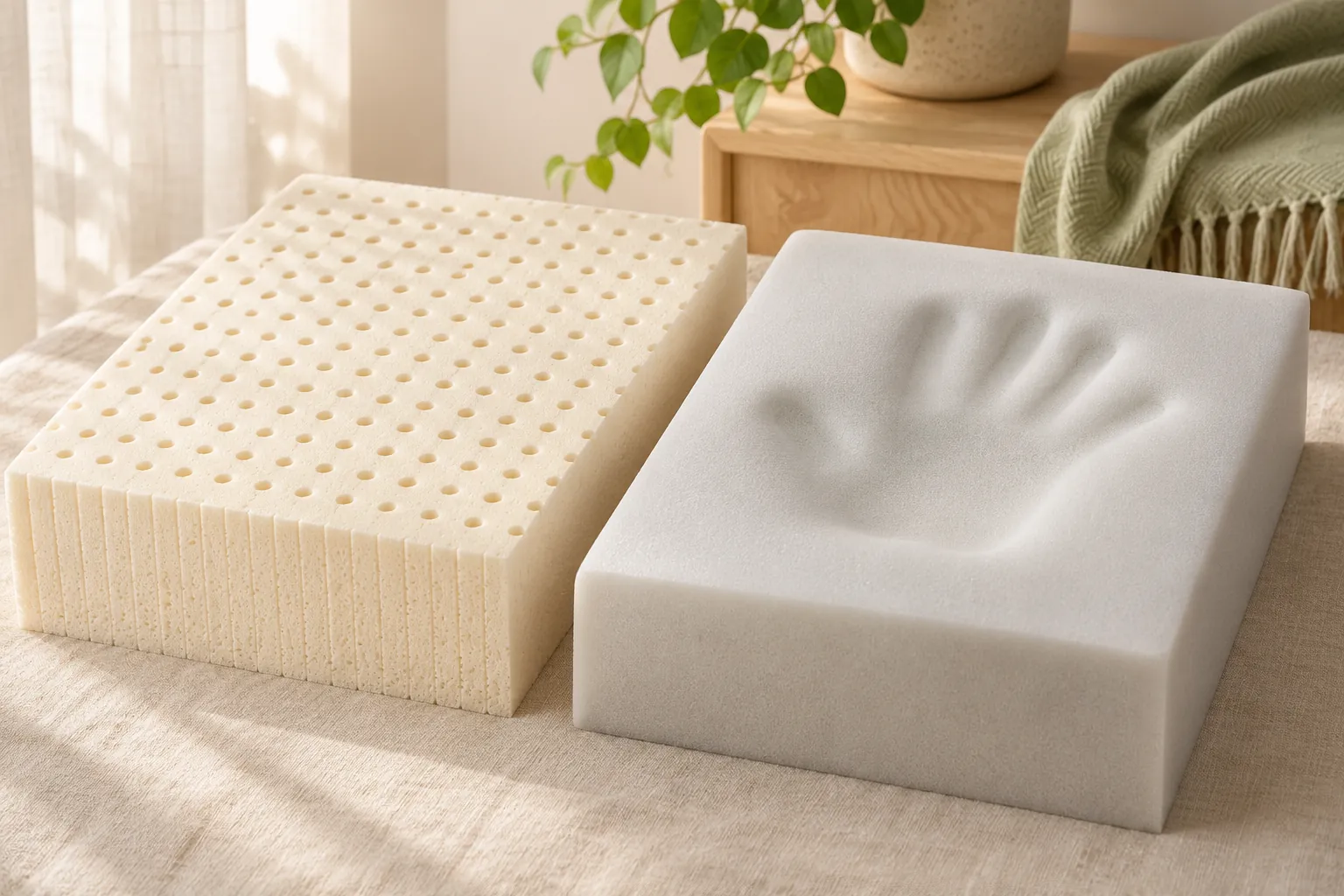
Latex and memory foam are two very different comfort materials. Latex springs back almost immediately: it supports by pushing gently back against the body, and it generally sleeps cooler. Memory foam gives way slowly under heat and weight: it cradles, follows your curves and absorbs movement very well. The right choice depends mostly on how you sleep, how warm you run and who sleeps next to you.
One note before we start: we have been building mattresses in Saint-Léonard since 1980, in latex, high-density foam and springs, but we do not make memory foam. This comparison is meant to help you choose, not to sell you one of the two options.
Key takeaways
- Latex bounces and responds right away. Memory foam sinks in slowly and gives a cradled feeling.
- Latex generally sleeps cooler. Memory foam holds more heat, although gel versions narrow the gap.
- Memory foam isolates a partner’s movements better. Latex makes it easier to change positions.
- Latex usually costs more and weighs more.
- If someone in your home has a latex allergy, talk to your doctor before buying a natural latex mattress.
What each material is made of
Memory foam
Memory foam is a so-called viscoelastic polyurethane foam. It came out of a 1966 contract with NASA’s Ames Research Center, which was looking to make aircraft seats safer. What sets it apart is that it reacts to heat. Under the body it softens and slowly takes the sleeper’s shape, then recovers a few seconds after you get up.
Like any polyurethane foam, it can carry CertiPUR-UScertification, which covers emissions and certain substances in the foam.
Latex
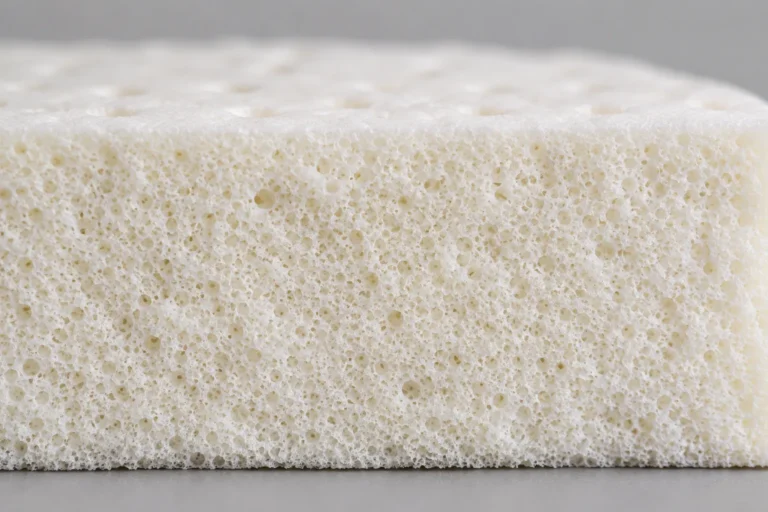
Latex is a foam made from the sap of the rubber tree, or from a blend of that sap and synthetic latex. It is made by two processes, Talalay and Dunlop, which give different feels: we compare them in our article on Talalay vs Dunlop latex. Either way, the foam is full of small holes that let air move through it.
Latex vs memory foam: side by side
The table sums up the differences most independent comparisons point to, including the Sleep Foundation’s. These are general tendencies: the density, thickness and construction of each mattress matter as much as the material.
| Criterion | Latex | Memory foam |
|---|---|---|
| Feel | Lifted, with some bounce | Cradling, you sink in |
| Recovery | Almost immediate | Slow, a few seconds |
| Heat | Generally sleeps cooler | Holds more heat |
| Changing position | Easy | Takes more effort |
| Partner movement | Well absorbed | Very well absorbed |
| Mattress weight | Heavy | Lighter |
| Price | Usually higher | Usually lower |
Which one suits the way you sleep
You sleep hot
Latex is generally the safer choice. Its open structure lets air through, and it does not soften with body heat. If you still like the feel of memory foam, look for a gel-infused version and a breathable cover.
You move a lot at night
Latex will make life easier: it recovers as soon as you move, without the “hole” feeling you sometimes get when turning over on memory foam.
You sleep on your side
Either can work. What matters is that the shoulder and hip sink in enough for the spine to stay straight. Memory foam does it by cradling, latex by supporting: a softer comfort layer, in either material, is often the key. Our article on firm or soft mattresses explains how to choose the firmness.
You share the bed
Memory foam absorbs movement very well, which helps if one of you gets up often. Latex absorbs it well too, with a little more bounce. If you do not like the same firmness, that is solved another way: some mattresses can be built with a different firmness on each side.
Allergies, certifications and lifespan
Latex allergy. Natural latex contains proteins that can cause a reaction in people who are allergic. If that applies to you or someone in your family, talk to your doctor before choosing a natural latex mattress.
Certifications. For foam, the benchmark is CertiPUR-US. For latex, look for certifications that apply to latex and textiles, such as OEKO-TEX or eco-INSTITUT, which cover the latex in our Talalay 8 inch model.
Lifespan. No independent study shows that one material always lasts longer than the other. The density of the foam, the thickness of the layers and the written warranty tell you far more than the name of the material.
What we make at Matelas Personnel
We do not make memory foam. If you like the feel of latex, or you are looking for a middle ground, here is where to look in our workshop:
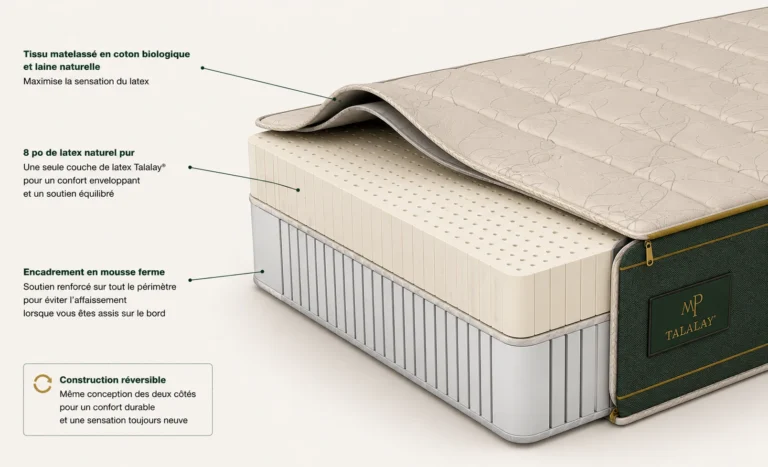
- Talalay 8 inch: eight inches of pure natural latex, with no foam core. It is the most distinct latex feel in our collection.
- L’ultime: four one-inch layers of Talalay latex on a high-density foam base, inside a zippered panel.
- Imperial: one inch of gel foam, one inch of Talalay latex and one inch of foam on an extra-dense base. It is our closest model to a middle ground between the cradle of foam and the response of latex.
On our models with a zippered comfort panel, layer exchanges are free for the first 60 days: if the feel is not right, we adjust it without replacing the mattress. The terms are on our warrantypage, and you can see the whole range under latex mattresses.
The simplest way: try them
No table replaces ten minutes lying on the mattress in your usual position. Visit our Saint-Léonard showroom to compare latex with our foams, or write to us describing how you sleep: we will tell you honestly whether our mattresses are right for you.