Bed Bug Signs on a Mattress: The 5 Traces to Look For
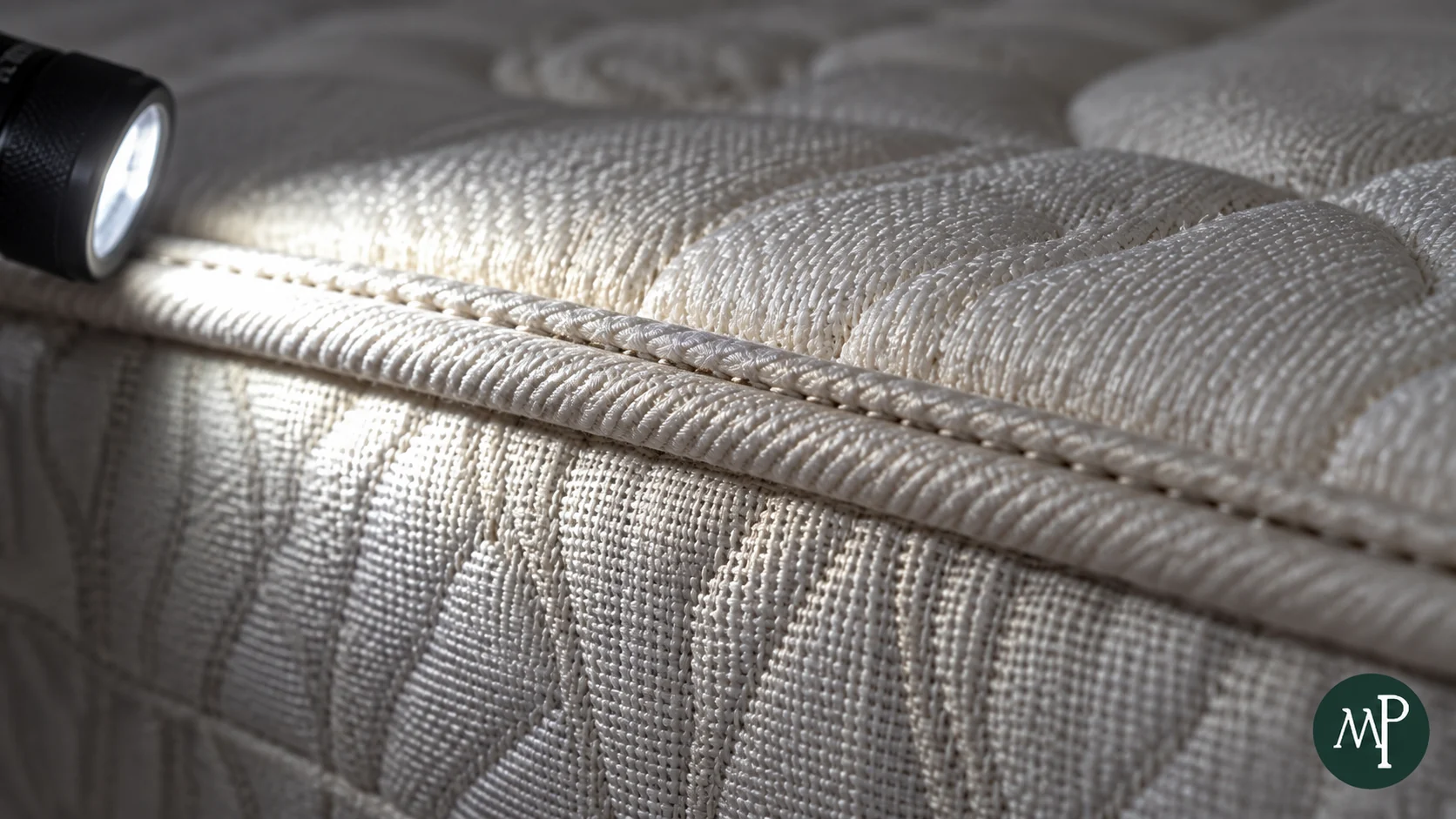
Bed bug traces on a mattress come in five kinds: small black dots about the size of a pepper grain, often clustered along the seams; tiny blood spots on the ticking or the sheets; empty translucent skins that look like insect shells; white eggs the size of a pinhead; and sometimes the insects themselves, brown, flat and about the size of an apple seed.
We build mattresses and we do not do pest control. This page exists only to help you identify what you have found, because half the people who call us worried have actually found something else. If the identification is confirmed, the next step belongs to a licensed exterminator, not to a mattress maker.
The short version
- The black dots are droppings. Wiped with a damp cloth they smear into a rusty halo: that is the most reliable test.
- Blood spots show up mostly on the sheets, and rarely on their own.
- Empty skins mean a population breeding on the spot, not a single insect passing through.
- Check the seams, the piping, the labels and the underside of the handles first.
- An infested mattress almost never has to be thrown out. An encasement deals with the mattress itself.
- Eggs and empty skins leave no room for doubt: they mean insects are breeding where you found them.
The five traces, one by one
The black dots
These are the droppings, and they are the most common sign. Look for dots under a millimetre across, black or very dark brown, grouped rather than scattered. You find them first in the seams and in the fold of the piping, because that is where the insects sit. A mattress can show several dozen without you ever having seen a bug.
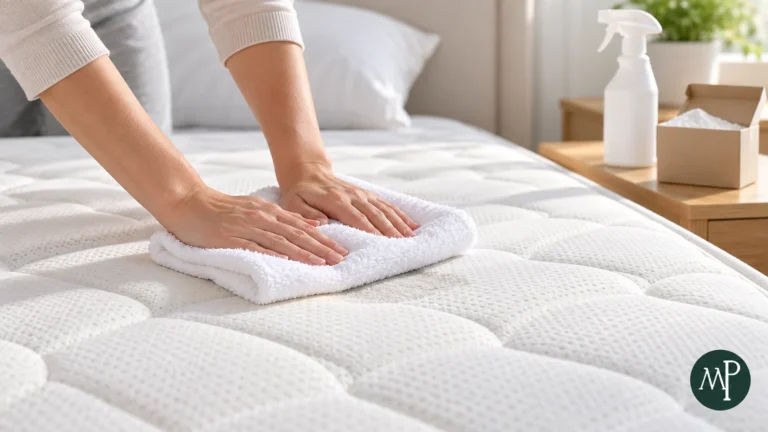
The test that settles it: rub one dot gently with a slightly damp white cloth. Bed bug droppings, made of digested blood, dissolve and leave a rusty or reddish-brown halo. Ordinary dirt, a pen mark or mould will not do that.
The blood spots
These are small red or brown marks, usually the size of a pinhead, left when a fed insect is crushed during the night. You see them mostly on the sheets and the pillowcase, more rarely on the mattress itself. On their own they prove nothing: a shaving cut or a nosebleed leaves the same thing. They only count if you also find black dots.
The empty skins
A bed bug moults five times before reaching adulthood and leaves behind a translucent amber shell each time, the exact shape of the insect but empty and brittle. These cast skins measure 1 to 3 mm depending on the stage. It is one of the most telling traces, because it means insects are growing where you found it. They turn up in the same folds as the droppings, and in the corners of the box spring.
The eggs
The eggs are about a millimetre long, the size of a pinhead. They are white or pearly, elongated, and sticky: the female fixes them to the surface, which is why they do not fall out when you shake the fabric. You find them in the darkest, most sheltered places, under the mattress, deep in the seams, between the slats of the box spring and close to the headboard. Like the empty skins, they point to a population breeding on the spot rather than a single stray insect.
The insects themselves
An adult bed bug is about 5 mm long, roughly the size of an apple seed. It is brown, oval and clearly flattened when it has not fed, darker and more rounded just after feeding. It has no wings and does not jump. The young are much smaller and almost translucent, which makes them very hard to see on pale ticking.
To compare what you found against reliable reference photographs, see the Government of Quebec page on recognising bed bugs. We deliberately do not publish insect photographs here: a generated or misidentified image would have you make an expensive decision on a false basis.
Where to look, in order
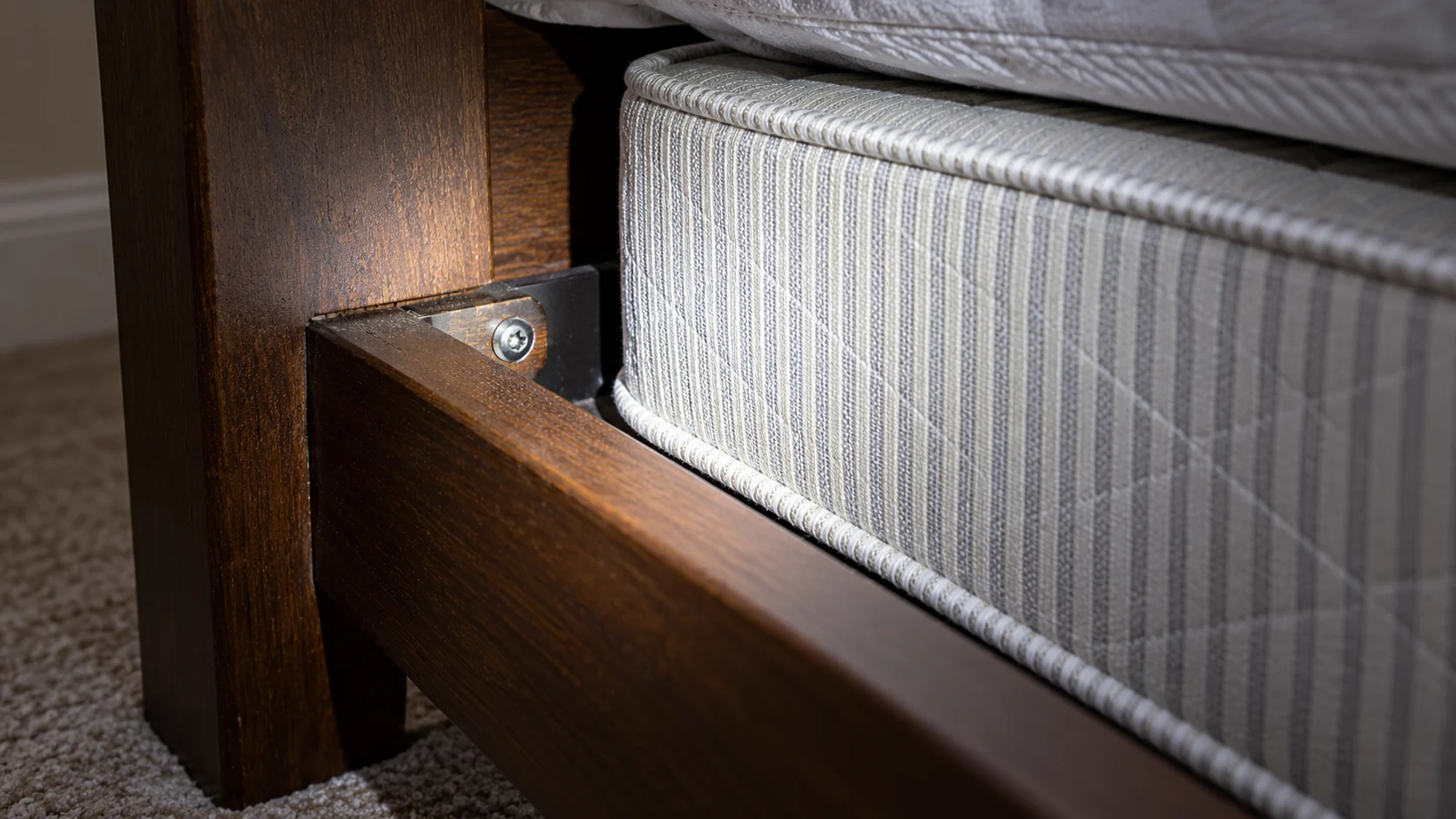
Bed bugs do not live in the middle of the mattress. They stay in tight, dark places close to the sleeper. Inspect with a flashlight and, if you have one, a stiff card to open up the folds.
- The perimeter seam, on all four sides, and the fold of the piping.
- The sewn-in labels and the underside of the carrying handles.
- The corners of the mattress, especially the ones at the head end.
- The box spring or base, which harbours them more often than the mattress does.
- The bed frame, the headboard and the screw slots that hold it together.
- The nightstand, the baseboards and the carpet edge within a metre of the bed.
What looks like bed bugs and is not
Most worries are settled right here. Before concluding anything, rule out the most frequent mix-ups.
| What you see | What it usually is | How to decide |
|---|---|---|
| Small black dots | Dust, lint, mould | The damp cloth: only droppings smear into a rusty halo |
| Small brown insect | Carpet beetle, booklouse, young cockroach | A bed bug is flat, wingless and oval, and does not move fast |
| Yellow rings | Built-up sweat and body oils | Diffuse and wide, where bed bug traces are distinct points |
| Bites on the skin | Mosquitoes, fleas, a skin reaction | Bites alone never identify the insect responsible |
On that last point, let us be clear: bites are not a diagnosis. Reactions vary enormously from person to person, and two people in the same bed can react very differently. Never conclude from skin alone, go and look for the traces on the mattress.
You have confirmed it. Now what?
Call a licensed exterminator. That is the only advice on treatment we are in a position to give you, and it is also the right advice: do-it-yourself treatments often fail and can scatter the insects into other rooms. If you rent, notify your landlord in writing and keep a copy of the notice.
Three things not to do in the meantime: do not move the mattress to another room, do not sleep somewhere else in the home, and do not put the mattress out on the curb before the exterminator has seen it. Each of those reactions spreads the infestation instead of containing it.
Does the mattress have to go?
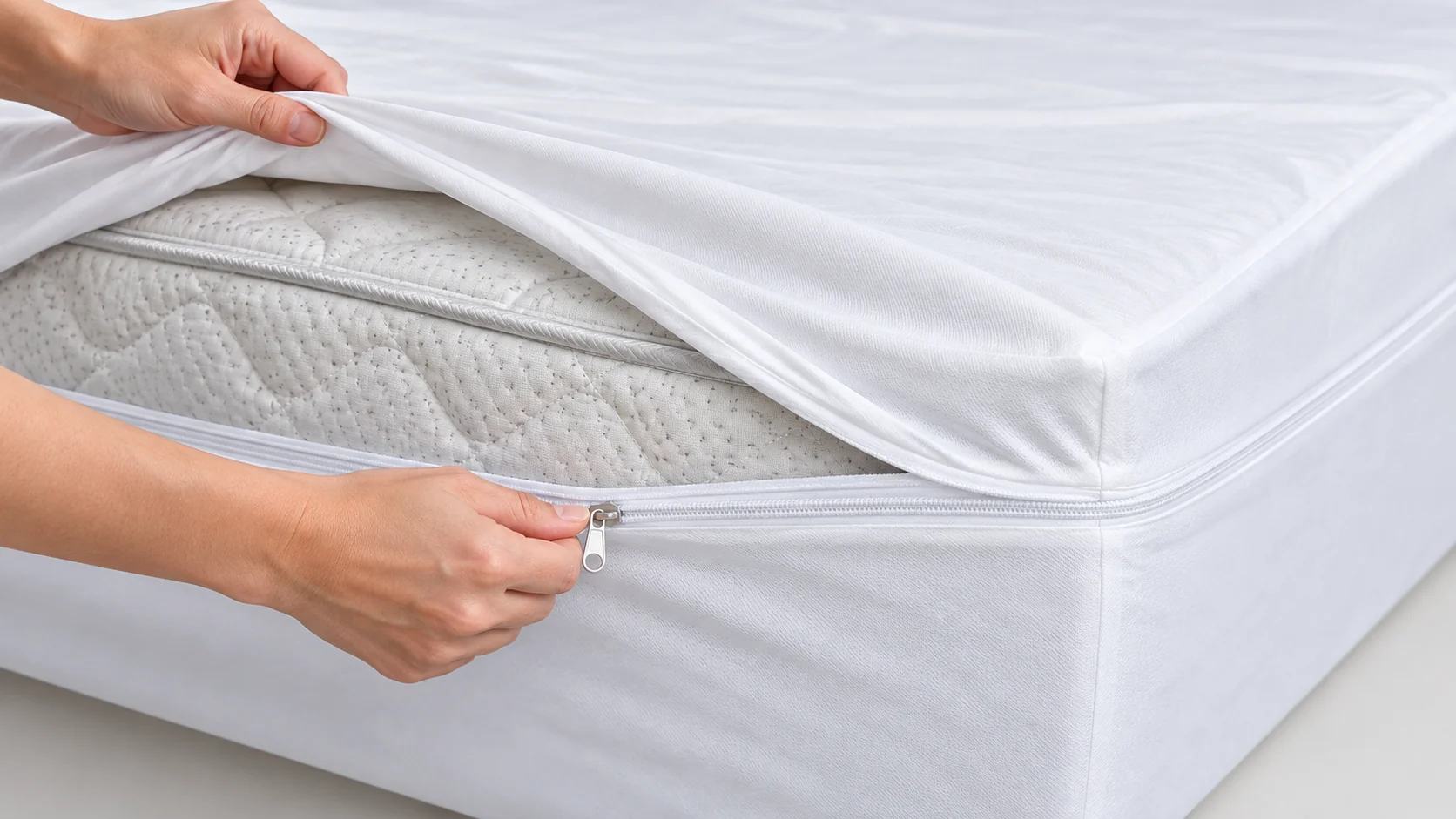
Almost never. This is the most expensive misunderstanding on the subject. An encasement, meaning a cover that seals the whole mattress with a closed zipper, traps whatever is inside and stops anything new from moving in. The trapped insects die over time and the mattress stays usable.
Throwing the mattress out without treating the room solves nothing either, since the insects also sit in the box spring, the frame and the baseboards. You would be buying a new mattress only to have it infested by whatever is left in the room.
We make no claim that any mattress, ours or anyone else’s, resists bed bugs or keeps them from settling in. No construction does that. What matters is treating the room and using an encasement.
A word on risk
Bed bugs are not known to transmit disease. Public health authorities classify them as a nuisance rather than a vector of infection. What they genuinely cost is sleep, money in treatment, and a great deal of anxiety. That is not nothing, but it is not a health emergency, and it is worth knowing that before making expensive decisions in a panic.
If the mattress was reaching the end anyway
An infestation often gets people looking closely at their mattress for the first time in years, and noticing something else: a dip that no longer rises, an edge that has collapsed, springs you can hear. Those are separate questions from the bed bug one, and they should be judged separately.
Our guide on how long a mattress lasts sets out the six signs that genuinely indicate the end, and our guide on how to clean a mattress covers routine upkeep once the situation is dealt with.
Frequently asked questions
What do bed bug traces look like on a white mattress?
On pale ticking, the droppings stand out as very distinct small black dots, often lined up along a seam rather than randomly spread. The contrast is what helps: on dark or patterned fabric you need a flashlight held at an angle to see them at all.
Can you have bed bugs without seeing any insects?
Yes, and that is the most common situation early on. The insects are nocturnal and spend the day in cracks you are not looking into. An early infestation is almost always spotted through the droppings and the empty skins, not through the insect itself.
Can a new mattress arrive with bed bugs?
It is very rare with a new mattress coming out of a factory, and distinctly less rare with a used mattress, one delivered by a carrier that also collects old bedding, or one stored in a shared warehouse. The real risk is in handling, not in manufacturing.
How long can a bed bug survive without feeding?
Several months in ordinary conditions, which is why leaving a room empty does not solve the problem. It is also the reason an encasement needs to stay on for a long time rather than a few weeks.
Do heat or cold deal with an infested mattress?
Professional heat treatments work, but they require a temperature held right through the item for a specific length of time, which household equipment does not achieve. Putting a mattress outside in winter does not do it either: the cold has to be constant and sustained, and one night at minus twenty does not meet the condition.
Does the box spring need replacing too?
Not necessarily, but it needs to be inspected as seriously as the mattress, and it often harbours more. A box spring can go into a sealed encasement as well. Decide after the exterminator has inspected it, not before.