How to Clean a Mattress: The 6-Step Method

The short answer to how to clean a mattress: strip the bed, vacuum the whole surface with an upholstery tool, spot-treat stains by blotting rather than rubbing, cover the mattress in baking soda for several hours, then vacuum it off and let the mattress dry fully before the sheets go back on. The one rule that matters more than any product you choose: keep the mattress as dry as you can, because moisture trapped inside foam or a coil unit is what causes lasting damage and smells.
We build and sell mattresses in Quebec, and the question comes up constantly, usually after something has already gone wrong. Below is the method we give customers, what to use on specific stains, and the honest point at which cleaning stops being worth the effort.
The short version
- Strip all bedding and wash it in hot water.
- Vacuum the top, sides and seams with an upholstery attachment.
- Blot stains with a barely damp cloth and the right solution for that stain.
- Sprinkle baking soda across the surface and leave it for a few hours.
- Vacuum the baking soda off completely.
- Air the mattress until it is dry to the touch, then protect it.
Budget two to three hours, most of which is waiting. Pick a dry day when you can open a window.
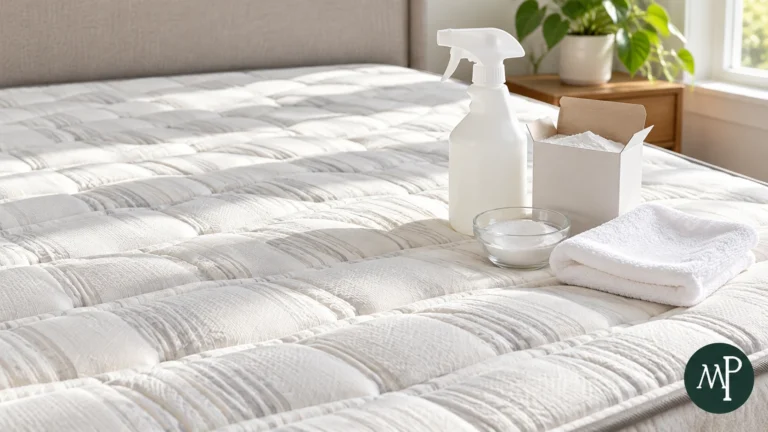
What you need before you start
- A vacuum with an upholstery or crevice attachment. Health Canada suggests a HEPA filter for soft furnishings, since it traps smaller particles (Health Canada, Dust and dust mites).
- Baking soda. A full box for a queen, more if the mattress smells.
- Two or three clean white cloths. Coloured ones can transfer dye into the ticking.
- A spray bottle of cool water.
- An enzyme cleaner for anything organic: urine, sweat, blood, vomit.
- Dish soap and 3% hydrogen peroxide for marks an enzyme cleaner does not lift.
- A fan, or a window that opens.
Skip the carpet shampooer and the steam cleaner. Both push far more water into the mattress than you can get back out.
How to clean a mattress, step by step
1. Strip the bed and wash everything
Sheets, pillowcases, protector, duvet cover. Health Canada recommends washing linens in hot water weekly as a dust mite measure, so use the cleaning day to catch up on whatever you wash less often. Check a protector label first, since many are backed with a membrane that hot water can damage.
2. Vacuum the whole surface
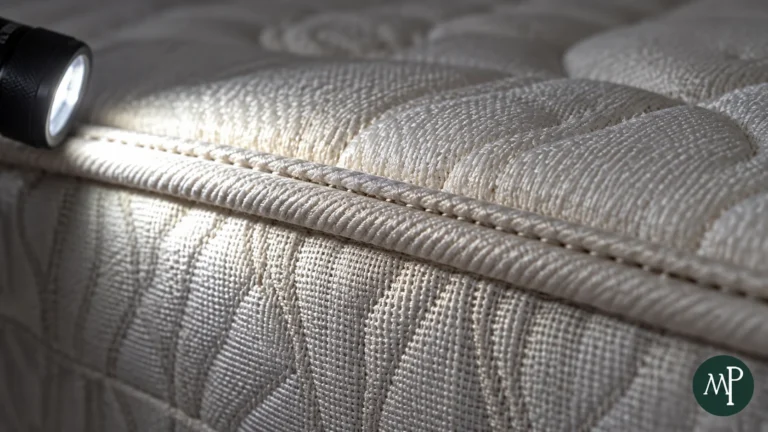
Work in overlapping passes across the top, then the sides and every seam. The piping around the edge collects the most dust, because a stitched channel traps it. A two-sided mattress needs the underside done as well, since it spends half its life facing down.

3. Spot-treat the stains
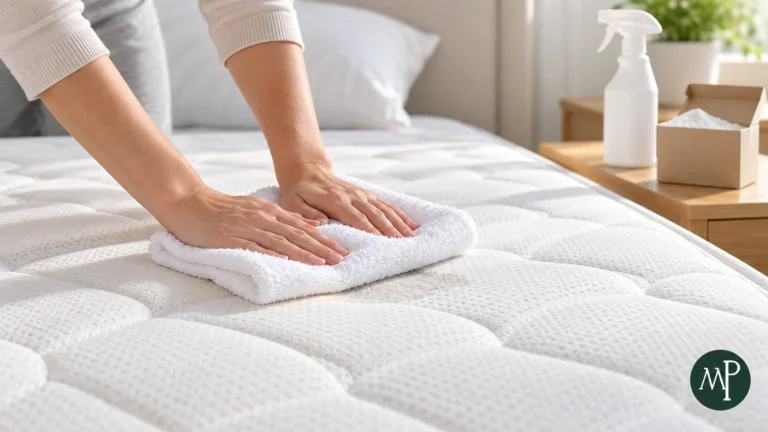
Spray the solution onto your cloth, not the mattress, then blot from the outside of the stain inward. Rubbing spreads it sideways and works it deeper into the fibres, which is the most common mistake we hear about.
Test any solution on a hidden spot near the bottom edge first, especially on light ticking.
4. Cover it in baking soda
Sift a visible layer over the whole surface, not just where the stains were. It pulls residual moisture out of the top layers and takes odour with it. A few hours is the minimum; overnight is better if you can sleep elsewhere.

5. Vacuum again, thoroughly
Go over the surface two or three times. Baking soda left in the fibres feels gritty under a sheet and holds moisture against the fabric.
6. Dry it completely
This step gets skipped and it decides whether the job worked. Open a window, aim a fan across the surface, and wait until the mattress is dry to the touch everywhere you treated. A fitted sheet over a slightly damp mattress is how mildew starts. Health Canada advises keeping indoor relative humidity between 35 and 50% to limit dust mites and mould, worth knowing if the bedroom is a damp basement.
How to treat the most common mattress stains
Yellow sweat and body oil marks
The most common discolouration and the most stubborn, because it builds up over years rather than landing in one spill. Mix roughly equal parts 3% hydrogen peroxide and cool water with a drop of dish soap, apply to a cloth, and blot. Expect to lighten these rather than erase them. Set-in yellowing usually will not come out completely, and no product on a shelf changes that.

Urine
Speed decides the outcome. Blot up as much as you can with a dry towel, pressing straight down, then treat with an enzyme cleaner and give it the dwell time on the label, usually fifteen to thirty minutes. Enzymes break down the compounds causing the smell, which is why plain soap leaves a mattress looking clean and still smelling of urine on a humid day.
Dried urine is harder and often needs two or three rounds. A mattress soaked repeatedly, a child’s bed over years of accidents for example, may not recover at all.
Blood
Cold water only. The Sleep Foundation notes blood stains set deeper when treated with heat, so warm water works against you (Sleep Foundation). Blot with cold water first, then hydrogen peroxide if a mark remains.
Vomit
Remove the solids, blot, then treat with an enzyme cleaner and deodorize with baking soda. The Sleep Foundation recommends wearing protective equipment while handling it. Do a second baking soda round, because the odour tends to return once the surface dries.
If the mark is localised rather than general, the method depends on what caused it, and using the wrong product can make it permanent. Our guide on how to remove a mattress stain sets out what to do for proteins, body oils and pigments.
How to get smells out of a mattress
Odour is either moisture or something organic left in the fibres. Baking soda handles the first, an enzyme cleaner the second. The mistake is reaching for a fabric spray that only masks it.
For a general stale smell, run a long baking soda round of twelve hours or more, then vacuum and air the room. For a smell you can identify, treat the source first and deodorize after. Sunlight and moving air help; scented spray on a damp mattress usually makes things worse within a week.
If the smell will not leave
A mattress that still smells after a thorough clean and a full dry has absorbed liquid into its core, and there is no way to reach that without soaking it further. Health Canada is direct on the extreme version and advises throwing away mattresses and pillows that have been wet for an extended period. If that describes yours, cleaning is not the answer and a replacement mattress is the better spend.
Two situations need more than the routine upkeep described here. For a urine accident, fresh or already dried, the steps are different and we have set them out in our guide on how to clean urine from a mattress. And if you noticed small black dots along the seams while cleaning, start instead with our guide to bed bug signs on a mattress.
What not to do to a mattress
- Do not soak it. Everything here assumes a barely damp cloth. Water that reaches foam or a coil unit does not come back out.
- Do not steam clean it, unless the manufacturer’s care instructions specifically allow it. Foam and latex hold the moisture. The exception is a bed bug infestation, where Health Canada does recommend steam cleaning intact infested mattresses, as part of a treatment run by a licensed professional (Health Canada, Bedbugs).
- Do not use bleach. It damages ticking, weakens fibres, and leaves a residue you sleep on.
- Do not scrub. Blot.
- Do not put a washable cover back on damp.
- Do not treat a bed bug problem yourself with sprays. Health Canada strongly recommends hiring a licensed pest control operator. The signs to look for on a mattress are black or brown spots, hard-to-see white eggs, and live or dead insects along the seams.
How often should you clean a mattress?
A full clean of the kind above is a twice-a-year job for most households and pairs naturally with rotating the mattress. Vacuum the surface at sheet changes if anyone in the house has allergies. Treat spills the day they happen, because that is what decides whether a stain becomes permanent.
A washable protector changes the maths, since it takes the sweat and spills that would otherwise reach the ticking. Health Canada also recommends encasing mattresses and pillows in dust mite impermeable covers.
What about an RV, a boat berth, or a built-in platform?
Odd-shaped beds are harder for a practical reason: you often cannot get the mattress out, and the space around it has poor airflow. Vacuum and blot in place, then prop the mattress on its edge if the frame allows and run a fan at it for longer than you would in a bedroom. In trailers and boats the recurring problem is damp, not stains.
If a mattress in one of those beds is past saving, replacing it is a different task from buying a standard size, because the cut has to match the platform. Our custom mattress service covers non-standard dimensions, cut corners and split firmness for two sleepers, with the consultation included.
When cleaning is no longer the answer
Cleaning fixes the surface. It does nothing for the structure. Look at replacement rather than another cleaning round if you recognise more than one of these:
- A visible dip or a ridge where you sleep that is still there after you rotate the mattress.
- You wake up stiff or sore and sleep better in other beds, including hotel beds.
- The smell returns within a few days of a full clean and dry.
- Stains have been treated more than once and are still there.
- The mattress has been soaked through, more than once or for a long stretch.
- You can feel individual coils, or the edges have collapsed and you roll off.
Sagging in particular is not a cleaning problem. Once the support layer has lost its shape, no amount of clean ticking will hold your spine in position.

If that is where you have landed, our foam, innerspring, latex and hybrid ranges each differ in how far you sink and how the surface handles heat and moisture. For sizing, the mattress size guide lists every standard dimension we make.
Our recommendation
Clean first if the mattress still supports you properly. A deep clean costs an afternoon and a box of baking soda, and on a structurally sound mattress it does most of what people hope a new one will do: removes the dust, lifts the marks it can lift, takes the smell out.
Replace it if the problem is structural or absorbed. A deep smell, a visible sag, persistent discomfort, or stains that have survived two treatments all point the same way, and no cleaning method reverses any of them.
Unsure which side of that line you are on? Visit one of our showrooms and describe what the mattress is doing, or read how we build to measure on the about us.
Frequently asked questions
Can you wash a mattress with water?
Not by soaking it. A mattress can be cleaned with a barely damp cloth and a suitable solution, but never washed the way bedding is. Water reaching the foam or coil unit stays there, and that is what causes mildew and lasting odour.
Does baking soda actually clean a mattress?
It absorbs moisture and odour, which is genuinely useful and the core of any deodorizing step. It does not remove stains or kill anything, so pair it with an enzyme cleaner for organic marks.
How do you sanitize a mattress?
Vacuum thoroughly, treat organic residue with an enzyme cleaner, deodorize with baking soda, then dry it completely with air moving over the surface. Avoid disinfectant sprays that soak in, and note that no home method sterilizes a mattress right through.
How long does a mattress take to dry after cleaning?
It depends on how much moisture you used and the air in the room. With a fan and an open window, a spot-treated area is usually dry to the touch within a few hours. Do not put bedding back before then.
Is it worth cleaning an old mattress?
It is worth cleaning any mattress that still holds its shape and supports you. If it sags, smells deeply or leaves you sore, cleaning is effort spent on a mattress that has already reached the end of its useful life.